Table Of Content

Incorporating AI tools in the evaluation phase of the ADDIE model can lead to more accurate assessments, faster improvements, and, ultimately, better learning outcomes for learners. By harnessing the power of AI in course evaluation, instructional designers can create more dynamic and compelling learning experiences that continuously adapt to their audience’s needs. The design phase deals with learning objectives, assessment instruments, exercises, content, subject matter analysis, lesson planning, and media selection. Systematic means a logical, orderly method that identifies, develops, and evaluates a set of planned strategies for attaining project goals.
A step-by-step guide to planning a workshop
Prototypes are developed at a rapid pace and continuously aligned with the project planning and project goals. It is not uncommon to have multiple iterations within a specific phase. For example, if the outline does not fit user needs, you will have to iterate the outline (maybe several times) before moving to the design prototype. Rapid instructional design is a more agile approach to instructional design.
Custom Programs
SAM stands for “successive approximations model,” and is like a “close cousin” instructional design approach to ADDIE. While similar to ADDIE, SAM is based on an agile development cycle with ongoing feedback and iterations of a content rather than the extended cycle found in ADDIE. You could opt to use SAM instead of ADDIE if you are comfortable with multiple steps happening at the same time and committing to rapid collaboration efforts with your client.
Workplace diversity training: Effective training...
The ADDIE model is a well-known and widely adopted tool that can increase the success of new training programs. By considering these kinds of questions and using the information in the analysis phase, instructional designers will then create an outline designed to meet learning objectives and satisfy business needs. The design phase deals with all the items needed to get approval from a client so you can then move towards creating course material. Designers play a very active role in this stage, which is crucial for the success of the project. Developers should consistently analyze, redesign and enhance the product to ensure effective product delivery.
A case study: a continuous improvement project of lecturing skills for clinical teachers in Chinese residency ... - BMC Medical Education
A case study: a continuous improvement project of lecturing skills for clinical teachers in Chinese residency ....
Posted: Mon, 11 Apr 2022 07:00:00 GMT [source]
Training evaluation form
One way to work around a tight deadline is to break up the topics into short courses. It is much easier to build a 5- to an 8-minute course than it is to build a 30-minute course. PADDIE+M is an extension of the PADDIE model, incorporating an extra step called “Maintenance.” The acronym PADDIE+M stands for Plan, Analysis, Design, Development, Implementation, Evaluation, and Maintenance.
Evaluation phase
This website is using a security service to protect itself from online attacks. There are several actions that could trigger this block including submitting a certain word or phrase, a SQL command or malformed data. Get a handy printable form for evaluating training and course experiences. You should always clearly understand the problem before designing the solution. The Centre for Education Technology at Florida State University first introduced the ADDIE model in 1975 for the US army. Its use later spread across all other branches of the US armed forces.
It’s important to brief stakeholders and update them on the learning goals and learning design choices made in this phase. A military training framework might not be the first thing that comes to mind when designing employee learning solutions. Yet, the ADDIE model has proven its versatility and effectiveness far beyond its initial scope, becoming a cornerstone of instructional design worldwide.
The Pendulum of Instructional Design Theory - ATD
The Pendulum of Instructional Design Theory.
Posted: Fri, 25 Mar 2016 07:00:00 GMT [source]
This systematic methodology ensures precision at each step, contributing to overall efficiency and consistency in the quality of course development. The ordered sequence minimizes the risk of overlooking crucial elements in the instructional design process. In the implementation phase, instructors put the learning materials into action. This stage involves the actual deployment of the training or educational program to the target audience. Trainers or instructors deliver the content, and learners engage with the materials and activities.
LMS Implementation
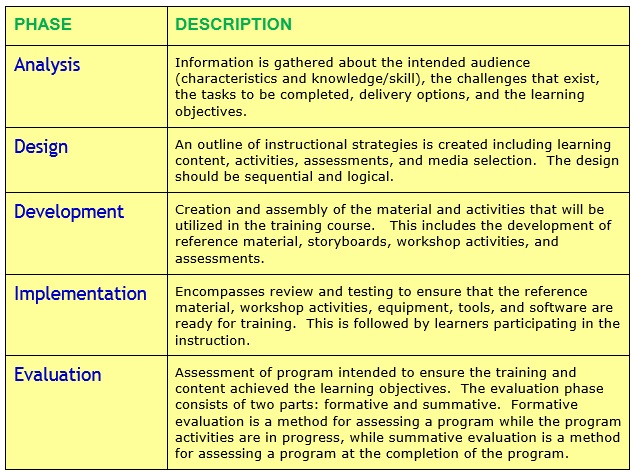
This sequence, however, does not impose a strict linear progression through the steps. Educators, instructional designers and training developers find this approach very useful because having stages clearly defined facilitates implementation of effective training tools. The ADDIE model is used as a systematic framework for instructional design, guiding the process of creating effective learning and development programs.
However, despite these changes, the ADDIE model has remained a timeless framework for instructional design. This is because the ADDIE process describes the fundamental steps needed to develop a learning program, which apply regardless of the tools or technology being used. “To ensure success when using the ADDIE model, it’s essential to have a clear understanding of your target audience and focus on setting clear and measurable learning objectives. This helps guide the content development process and ensures that learners are achieving their desired learning outcomes,” explains Anchal Dhingra, Learning Consulting Manager at AIHR. The ADDIE model is an instructional design tool that can help HR and training professionals create, organize, and streamline effective learning and development programs in their organization.
Having the evaluation phase as the last step of the ADDIE instructional design model serves as a reminder to embed opportunities to seek feedback and evaluate progress at every step of the way. Florida State University initially developed the ADDIE framework in 1975 as part of its instructional theories for military training. From the very first definition, it acknowledged that the rather universal division in steps can be applied to any curriculum development activity. In fact, it’s not different from any step-by-step approach to project design and implementation.


No comments:
Post a Comment